Mercury (Budha) in Vedic Astrology
 Abstract
Mercury (Budha) occupies a distinctive position in Vedic astrology (Jyotiṣa) as the graha governing intellect, language, commerce, and analytical reasoning. Classical Sanskrit texts describe Mercury as a neutral, mutable planet whose effects depend heavily on association with other grahas. This paper synthesizes scriptural, astronomical, and interpretive perspectives to present a coherent academic understanding of Mercury’s role within the Jyotiṣa framework.
1. Scriptural Foundations and Mythological Context
In the Bṛhat Parāśara Horā Śāstra (BPHS), Mercury is characterized as saumya (gentle), pāṇḍita (learned), and endowed with sharp intellect. Mythologically, Mercury is the son of the Moon (Candra) and Tara, symbolizing the blending of mind and intellect. This lineage reflects Mercury’s liminal nature—situated between emotion (Moon) and logic (Sun), and capable of adopting the qualities of the planets it associates with. Classical texts such as Sarāvalī and Phaladīpikā further emphasize Mercury’s role in communication, calculation, and discrimination (viveka).
2. Astronomical Characteristics and Symbolic Resonance
Mercury’s proximity to the Sun, rapid orbital motion, and frequent retrograde cycles have shaped its symbolic associations with agility, adaptability, and fluctuations in thought. Its visibility as a morning or evening star reinforces its liminal identity, mediating between light and darkness, intuition and analysis. Jyotiṣa interprets these astronomical features as indicators of mental versatility, intellectual restlessness, and the capacity for both clarity and confusion depending on planetary context.
3. Natural Significations (Naisargika Kārakatva)
Mercury is the natural significator of:
– Intellect, logic, and analytical reasoning
– Speech, language, writing, and communication
– Commerce, trade, negotiation, and accounting
– Youthfulness, playfulness, and adaptability
– Mathematics, astrology, and technical skills
Psychologically, Mercury governs the processes of learning, categorizing, interpreting, and expressing information. It represents the rational mind (buddhi) as distinct from the emotional mind (manas).
4. Functional Role in the Horoscope
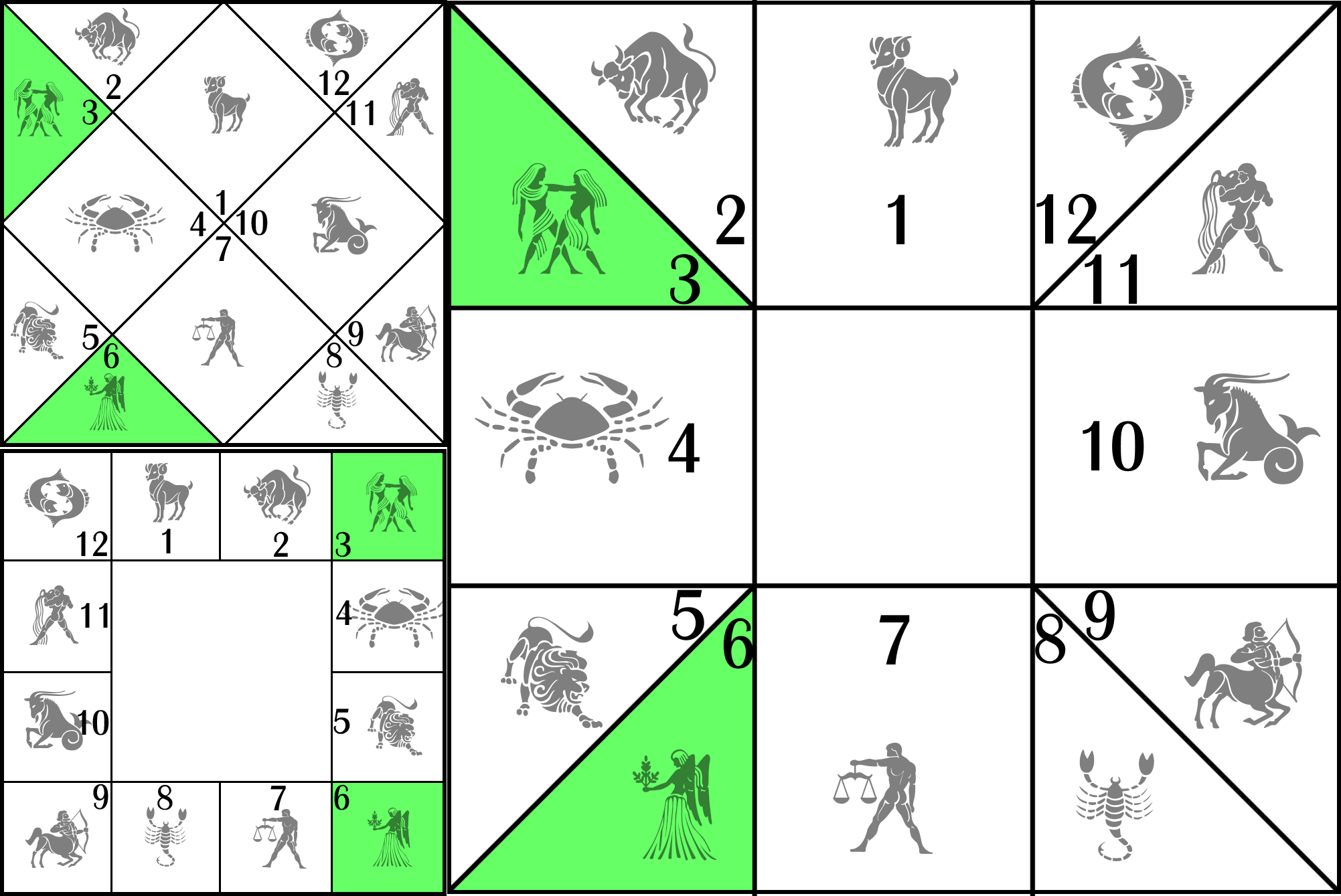
Mercury’s influence is uniquely context-dependent. Classical Jyotiṣa describes Mercury as saumya (benefic) when unafflicted, but capable of becoming pāpa (malefic) when associated with malefic planets. This mutability reflects its symbolic role as an interpreter and mediator. For Virgo and Gemini ascendants, Mercury becomes a functional benefic and often a source of intellectual strength and professional success. Its affliction by Rahu, Ketu, or Saturn may produce anxiety, miscommunication, or cognitive distortions.
5. Mercury in Rāśis and Bhāvas
Mercury attains exaltation in Virgo, where its analytical and discriminative faculties reach their peak, and debilitation in Pisces, where emotionality and intuition dilute its rational clarity. In its own signs—Gemini and Virgo—Mercury fosters intellectual curiosity, linguistic skill, and adaptability.
In bhāva analysis, Mercury in the 3rd, 5th, 6th, or 10th houses enhances learning, communication, and professional competence. In the 8th or 12th houses, it may incline toward esoteric studies, research, or introspective analysis, though sometimes at the cost of mental stability.
6. Yogas and Special Conditions
Mercury participates in several classical yogas, including:
– Bhadra Mahāpuruṣa Yoga: Occurs when Mercury occupies a kendra in its own or exalted sign, producing individuals of exceptional intellect, eloquence, and administrative ability.
– Budha–Āditya Yoga or Nipuna Yoga: Formed by conjunction with the Sun, enhancing intelligence, communication, and leadership.
Mercury’s conjunctions with malefics, particularly Rahu, create complex cognitive patterns—ranging from brilliance and unconventional thinking to confusion or deceptive communication.
7. Ethical and Spiritual Dimensions
In the spiritual domain, Mercury represents viveka—the discriminative faculty essential for ethical judgment and scriptural study. When functioning as ātmakāraka in Jaimini astrology, Mercury indicates a soul path centered on learning, communication, and the refinement of discernment. The spiritual challenge lies in balancing intellect with humility, avoiding sophistry, and cultivating truthful expression.
Conclusion
Mercury in Vedic astrology embodies the principle of cognition, communication, and adaptability. Its unique mutability makes it both powerful and context-sensitive, capable of producing intellectual brilliance or confusion depending on planetary associations. As a graha that bridges emotion and logic, Mercury plays a pivotal role in shaping human thought, language, and ethical reasoning within the Jyotiṣa tradition.