 Mars is called Maṅgala (positive) or Kuja (negative) in Vedic Astrology
Abstract: In Vedic astrology (Jyotiṣa), Mars (Skt. *Maṅgala*, *Kuja*, *Bhauma*) occupies a central position as the graha governing energy, conflict, initiative, and transformative discipline. Classical Sanskrit texts describe Mars as a *krūra* (malefic) planet whose influence shapes both material and psychological dimensions of human life. This note synthesizes scriptural, astronomical, and interpretive perspectives on Mars within the Jyotiṣa tradition.
1. Scriptural and Mythological Foundations
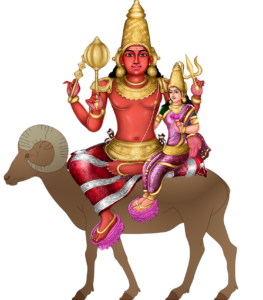
Mars is identified in the *Bṛhat Parāśara Horā Śāstra* (BPHS) as a fiery, blood‑red graha endowed with strength, aggression, and the capacity to sever or penetrate. Mythologically, Mars is associated with the deity Skanda/Kārttikeya, the commander of the celestial army, symbolizing martial valor and protective force. The planet’s Sanskrit epithets—*Kuja* (“born of the Earth”) and *Bhauma* (“son of Bhūmi”)—reflect its grounding in physicality, land, and survival instincts.
2. Astronomical Characteristics and Symbolism
Mars’ reddish appearance, iron‑rich surface, and periodic retrograde motion have historically informed its symbolic associations with blood, heat, conflict, and cyclical intensification of energy. Jyotiṣa integrates these astronomical observations into a metaphysical framework, interpreting Mars as the source of kinetic force (*kriyā śakti*) and decisive action.
3. Natural Significations (Naisargika Kārakatva)
Mars is the natural significator of courage, warfare, physical strength, engineering, surgery, land and property, younger siblings, and competitive activity. As a *kṣatriya* graha, it governs the instinct to protect, confront, and overcome obstacles. Psychologically, Mars represents assertiveness, anger, passion, and the capacity for self‑assertion or self‑destruction depending on its condition.
4. Functional Role in the Horoscope
The influence of Mars varies according to ascendant (lagna) and house lordship. It becomes a yogakāraka for Cancer and Leo ascendants, producing constructive leadership and disciplined ambition. In other contexts, Mars may generate conflict, impulsiveness, or volatility, particularly when afflicting the Moon or Venus. Its placement in houses associated with relationships (4th, 7th, 8th, 12th) forms the basis of Kuja Doṣa, a traditional indicator of marital tension, though modern scholarship treats this with nuance.
5. Mars in Rāśis and Bhāvas
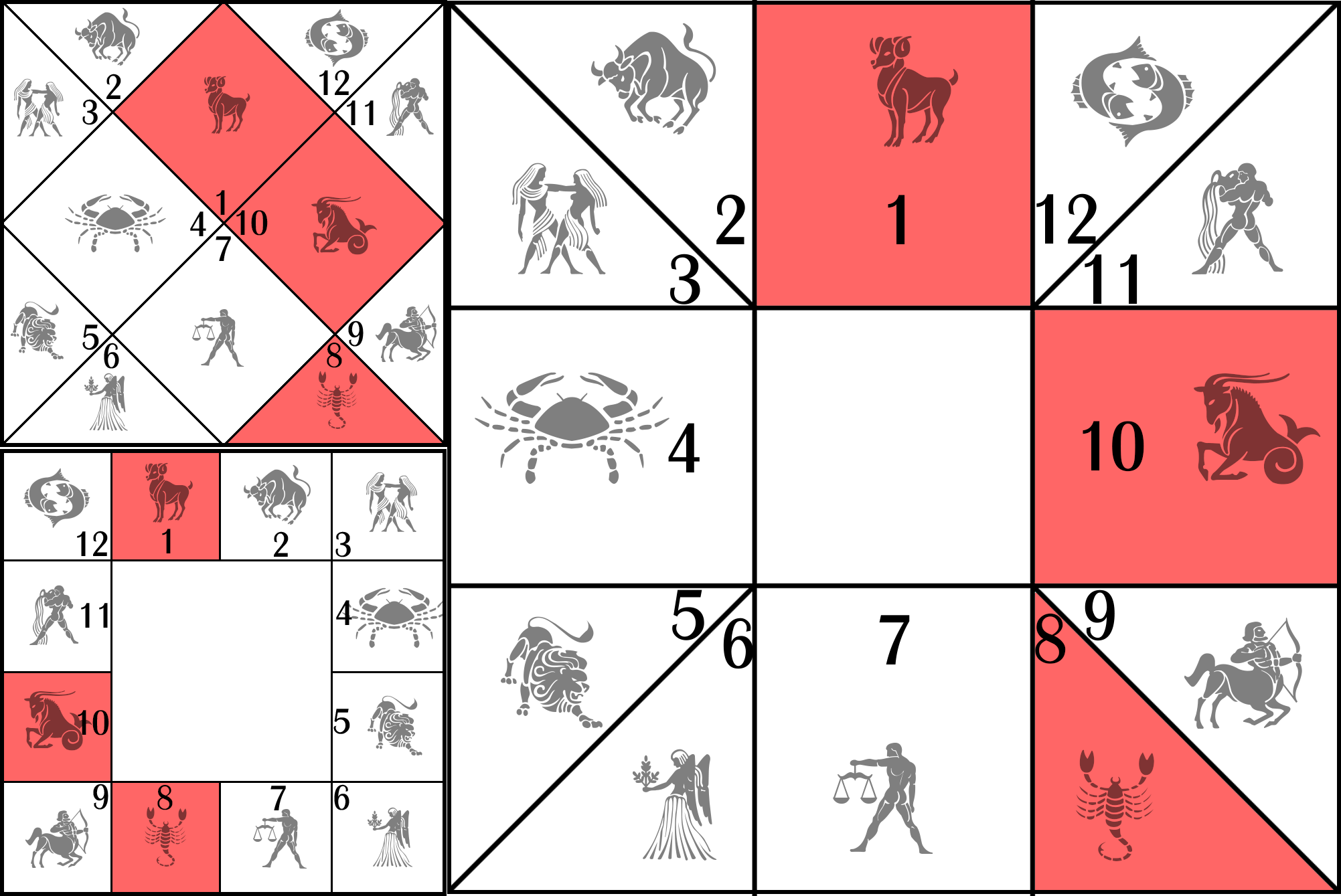
Mars attains exaltation in Capricorn, where its raw energy is disciplined by structure, and debilitation in Cancer, where emotionality weakens its assertive nature. Its own signs—Aries and Scorpio—highlight initiative and transformative intensity. In bhāva analysis, Mars in the 3rd, 6th, or 10th houses often enhances courage, competitiveness, and professional achievement, whereas placements in the 4th or 7th may challenge domestic harmony.
6. Yogas and Special Conditions
Mars participates in several classical yogas, most notably **Ruchaka Mahāpuruṣa Yoga**, arising when Mars occupies a kendra in its own or exalted sign, producing individuals of exceptional bravery, leadership, and physical prowess. Its conjunctions with Saturn, Rahu, or Ketu create complex energetic dynamics that can manifest as conflict, ambition, or transformative discipline.
7. Spiritual and Ethical Dimensions
Beyond material significations, Mars plays a role in spiritual development. When functioning as *ātmakāraka* in Jaimini astrology, Mars indicates a soul‑level lesson involving mastery of anger, cultivation of disciplined action, and transformation of aggression into protective dharma. The ethical challenge of Mars lies in converting raw force into constructive courage.
Conclusion
Mars in Jyotiṣa represents the principle of directed energy—capable of destruction or disciplined achievement depending on its placement and conditioning. Its study integrates astronomy, mythology, psychology, and ethics, making it a pivotal graha for understanding human agency and conflict within the Vedic astrological framework.